Interviews, Folk Dance, and Intercultural Learning in Alcalá la Real
“The project also made me more aware of my surroundings and of how privileged I am. Being a European Union citizen gives me many opportunities and forms of support, and this experience helped me reflect more deeply on the different realities people face depending on where they come from.”
My name is Noémi Juhász, and I am a 20-year-old from Hungary. I study Geography, although I am currently taking a gap year. I wanted to move to Spain for a short period, and this is how I found the LearnInRural project and decided to apply.
I am planning to study Communication and Media, so the topic of the project was very suitable for me. I am interested in making videos and conducting interviews, and as a Geography student, travelling abroad is always a valuable opportunity to learn. For this reason, the project offered me a meaningful combination of personal development, intercultural learning, media-related tasks, and direct experience in a rural community.
In Alcalá la Real, one of the biggest challenges is encouraging young people to stay in the town or return after their studies. It is important to offer them job opportunities and create a more liveable environment where they can see a future for themselves. Supporting local youth is essential for the long-term development of the community.
Another major challenge is supporting migrants living in the town. It is important to provide them with opportunities to adapt to the local lifestyle, learn Spanish, and find employment. During the project, we had the chance to speak with Moroccan women and learn directly about their backgrounds and the difficulties they face during migration and integration. These conversations helped us better understand the social and cultural challenges they encounter in their everyday lives.
In the first week, we received training on how to conduct interviews, record and edit videos, and ask appropriate questions. Later, each of us had to interview a migrant about their experience of leaving their home country in search of a better life. The most challenging part was overcoming language barriers. I conducted my interview in English, while the answers were given in Spanish, which required extra attention, patience, and concentration.
During the project, we had the opportunity to connect with people from every age group, from young children to older residents. The Hungarian team organised a traditional folk dance workshop for children aged 6 to 13, where they could learn about our culture in a fun and interactive way.
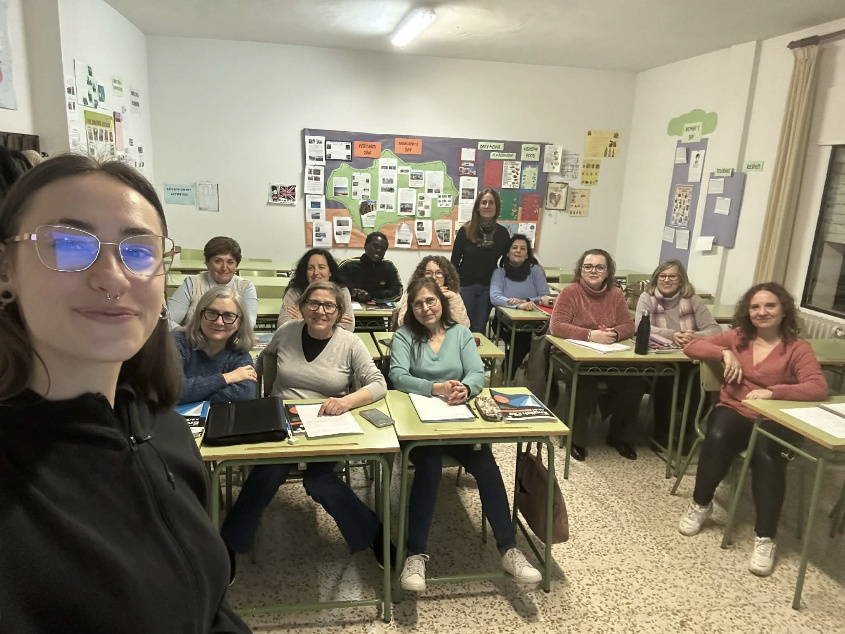
We also took part in teaching English at the local adult education centre, where classes are offered to people from different backgrounds in the area. There, I met many kind local residents and had the chance to practise both English and Spanish with them. We also had Spanish classes twice a week, and using the language in everyday situations helped me improve significantly.
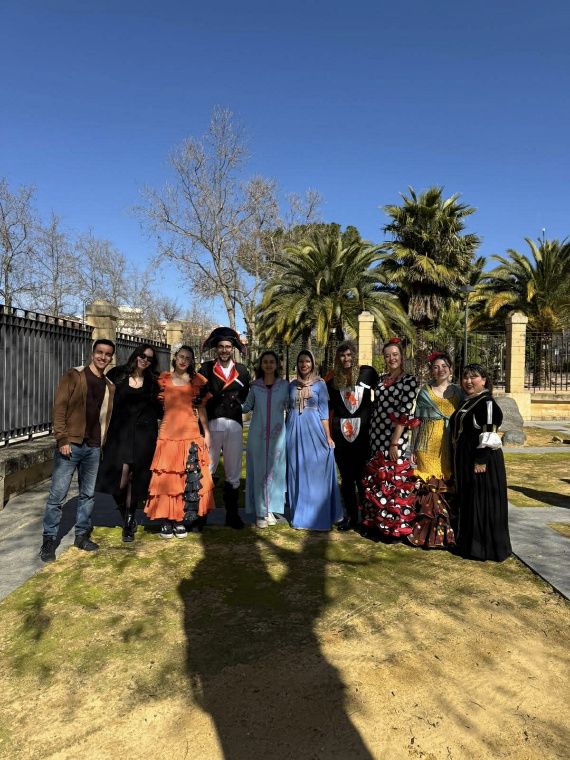
Living and communicating in a multicultural environment was a truly valuable experience. Beyond grammar and vocabulary, we also learned local expressions and became familiar with the Andalusian accent, which made communication more authentic and enjoyable. I experienced Spanish life through the eyes of local people. I was even able to take part in the Andalusian Day parade dressed in a traditional flamenco dress, which was a very special experience.
The most challenging part of the project at the beginning was the shared house. When I first arrived, I felt nervous and unsure about how I would manage living with more than 20 people, sharing the same kitchen and bathrooms, and sleeping in the same room with two other girls. However, in the end, it became one of my favourite parts of the project.
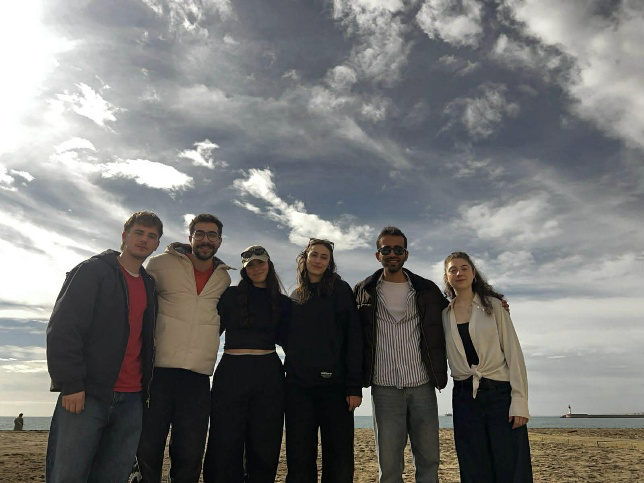
We spent many evenings together, talking, playing games, or watching something as a group. We learned each other’s habits and adapted to one another. We also learned dances, phrases, gestures, and customs from each other. I will always be grateful for these six weeks and for the people I shared them with.
During the project, I became a more open-minded person. I lived with people from many different backgrounds and learned about their cultures, the current political situations in their countries, and their personal stories. I created strong connections with many of them, and I hope to meet them again in the future.
This experience not only improved my language skills, but also helped me grow both personally and professionally. For me, the best part was the people I had the chance to meet, both local residents and volunteers. We spent much of our time together, travelling, talking, learning, and sharing experiences.
The project also made me more aware of my surroundings and of how privileged I am. Being a European Union citizen gives me many opportunities and forms of support, and this experience helped me reflect more deeply on the different realities people face depending on where they come from.