Siesta, Solidarity, and Migrant Stories in Rural Andalusia
“One of her lyrics touched me deeply: “Pero mi corazón nunca ha sido mío, yo siempre lo doy. Toma un trozo de mí, guárdalo para cuando no esté.” For me, this means: “But my heart has never been mine, I always give it away. Take a piece of me, keep it for when I am gone.” A few years ago, I realised that my soul is like a large puzzle, made of many pieces inspired by people I have loved or shared even the smallest connection with. I can confidently say that during these six weeks, I gained many new puzzle pieces.”
My name is Petra Tavasz. I am 24 years old and I am from Hungary. I decided to join the LearnInRural project because I had always wanted to experience volunteering. I had previously taken part in Erasmus activities, which shaped me in more ways than I could have imagined. When I learned about the European Solidarity Corps, I immediately knew that I wanted to participate in a project.
I graduated in International Relations with a minor in Human Rights Studies. This was one of the main reasons why I chose this particular project, as it focuses not only on rural life, but also on migration and the migrant community in Alcalá la Real. I have always wanted to help others, and this project gave me the opportunity to do so. It definitely left a mark on me and gave me many thoughts about what I may want to pursue in my future career.
When I first came to Alcalá la Real, I took the bus from Granada and immediately noticed olive trees on both sides of the road, stretching as far as the eye could see. That was the exact moment when I understood why the project was taking place in a town like Alcalá. I was not surprised to learn that many young people tend to leave and move to larger cities where there are more opportunities. I come from a small town similar to Alcalá, and we face the same general problem.
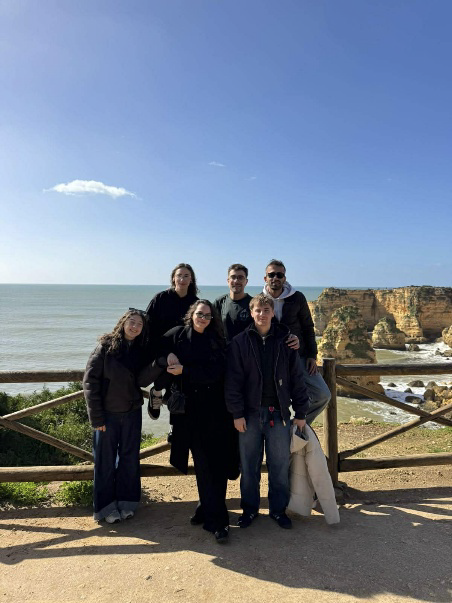
At the same time, I was glad to learn that there are opportunities for migrant people in Alcalá, giving them a chance to create a better life for themselves. Antonio, our project leader, took us on hikes in and around Alcalá, which helped us learn about the region and observe rural work in practice. During one workshop, we even learned how to plant trees, which was very interesting for me.
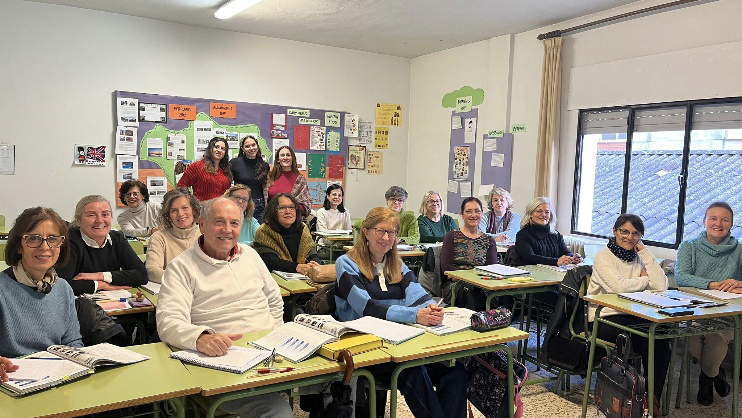
The sense of community in Alcalá la Real is truly special. This was one of the things that surprised me the most. People are open-minded and kind-hearted, and it does not always matter if there is no common language, because here everyone seems to speak the language of empathy. We had the chance to assist English classes at the Adult Centre, which was honestly one of the highlights of my time here. I left every class with a big smile, and it always made my day. It was amazing to see so many people, mainly adults, so eager to learn, connect, and dedicate time from their daily routines to improving themselves. I also deeply appreciated the people who provide this free opportunity and make it possible several times a week. I truly hope that I was able to help participants feel more confident when speaking English with foreigners.
We also had the opportunity to meet the local community of Moroccan women, which is an experience I will carry in my heart forever. Learning about their struggles and stories truly touched me. We discovered that, in many cases, men migrate first, try to find work, and once the situation becomes more stable, their families join them. It is very important for them to preserve their culture, religion, and language, so many children grow up speaking Arabic at home and Spanish in kindergarten and school.
One common challenge is learning how to write in Arabic, as children do not always have the opportunity to learn it at school. Men often learn Spanish more quickly because the work environment helps them practise. For women, however, the process can be more difficult. This is why NGOs play an important role by creating spaces where women can learn Spanish together and form a supportive community at the same time.
Having the chance to speak with these women made me realise the privilege I grew up with and continue to have today. Some of them never learned how to read or write in Morocco, and now they are in Spain, trying to learn a foreign language mainly through memory. Meeting them brought up many thoughts and emotions, and I am very thankful for that experience. I felt relieved to know that they are part of an accepting and open community, where nationality, skin colour, religion, or sexuality are not the first things people see. Instead, they see another person, another soul like themselves.
As part of the project, we had the task of recording an interview with a migrant, refugee, or young person from Alcalá. I decided to record a video with Katarina, a Ukrainian refugee who is also a volunteer like me and lives in the volunteer house. She teaches English to children in different schools in Alcalá. She still has family in Ukraine, but she is planning to settle in Spain. I decided to centre my interview around the topic of intercultural sensitivity. She was very easy to work with, and we ended up having a very interesting conversation. I was grateful to see things from her perspective. Although we had already had many conversations as housemates, this interview made me feel especially close to her.
As someone who grew up and socialised in Central and Eastern Europe, the concept of siesta was difficult for me to understand at first. It felt strange that everything stopped in the middle of the day. Pressing pause like that was challenging to get used to, but there was also something fascinating about it. I had always thought of Spanish people as very social, and these six weeks proved that impression to be true.
Many elements of Spanish culture seem designed to bring people together. Spending the siesta sitting around the brasería before returning to work, meeting friends at a tapería after finishing a shift, and sharing tapas around the table all reflect this. Tapas culture, in particular, felt very social to me: ordering different small dishes, sharing them, drinking Tinto de Verano, and talking about life. Contrary to the mindset in some other parts of Europe, Spanish people seem to work to live, not live to work. They often appear happy and positive. Many people say this is because of the climate and the sunshine, but I honestly think it is strongly connected to their sense of community and togetherness. This is something I would like to carry into my own way of living.
Living in a house full of volunteers is an experience I will never forget. At first, I was shocked to learn that we would share a house with more than 20 people from different parts of the world. After the initial shock, however, it truly grew on me. I met some of the most wonderful people and created bonds that I did not even know were possible in only six weeks. We did almost everything together, and somehow we always had something new to talk about.
I learned so much from the other volunteers. We were different in many ways, having grown up on different continents, in different countries and cultures, but we all shared one thing in common: a constant desire to learn. It was truly inspiring to be surrounded by curious people, and it encouraged me to become a better person every day. I was lucky to meet so many precious people whom I probably would never have met if I had not decided to take a leap of faith, put my life in a suitcase, and move to Spain for this project.
Since arriving in Spain, I listened to Rosalía a lot in order to immerse myself more deeply in the culture through music. One of her lyrics touched me deeply: “Pero mi corazón nunca ha sido mío, yo siempre lo doy. Toma un trozo de mí, guárdalo para cuando no esté.” For me, this means: “But my heart has never been mine, I always give it away. Take a piece of me, keep it for when I am gone.” A few years ago, I realised that my soul is like a large puzzle, made of many pieces inspired by people I have loved or shared even the smallest connection with. I can confidently say that during these six weeks, I gained many new puzzle pieces.
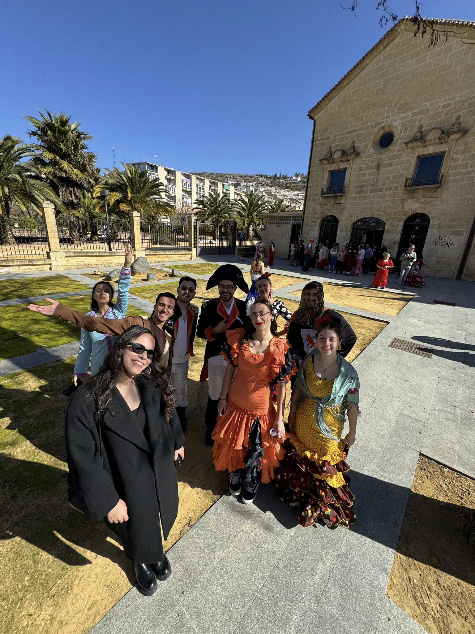
I will keep this experience in my memory forever. This was my first time volunteering, but definitely not the last. It is incredible to me how a small town that I did not even know existed six weeks earlier became so important to me in such a short time. It felt like the blink of an eye. Between siesta and fiesta, we found each other.
Gracias por todo, Alcalá la Real.