Learning Community, Nature, and Intercultural Communication in Alcalá la Real
“I have gained so many good memories and felt that I contributed to the life of the local community to a certain extent.”
My name is Anna, I am 24 years old, and I am from Hungary. I graduated from university in February 2025 with a bachelor’s degree in Export and Technology Management. During university, I lived in Denmark, but after graduation I moved back to Hungary and started a gap year. I wanted to take an academic break, find new ways to improve myself, learn more about different cultures, and meet new people.
To fulfil these expectations, I decided to join the LearnInRural volunteering opportunity. Working with young people and vulnerable communities was something I had not done before, and I felt inspired to develop my interpersonal communication and group work skills. I also wanted to experience life in a Mediterranean country, as it is very different from Denmark both culturally and in terms of climate.
In Hungary, I live in a medium-sized town. It has a slightly bigger population than Alcalá la Real, but it is much larger in area. Calm streets and low traffic are not unusual for me, but I still noticed important differences in Alcalá.
One of the main differences I observed was the age structure of the town. In Alcalá, many citizens are elderly people. It was interesting for me to see how they gathered on benches and spent time together during the afternoon and evening. In Hungary, I usually see this kind of daily social life in very small villages that are less attractive for young people. In Alcalá, I rarely saw young people on the streets, in bars, or in cafés meeting or doing activities together.
This made me reflect on youth participation in rural areas. We learned that many young people leave Alcalá to live and work in Granada, and this also affects the agricultural industry in the surrounding area. The lack of young people changes the rhythm of the town and creates challenges for rural life.
For me personally, one of the main challenges was the feeling of isolation. Alcalá is beautiful, calm, and welcoming, but it is difficult to travel to other places using public transport. Buses are not very frequent, and travelling to other towns or cities often requires going through Granada, which adds extra time to the journey. This helped me understand how transport limitations can affect daily life in rural communities.
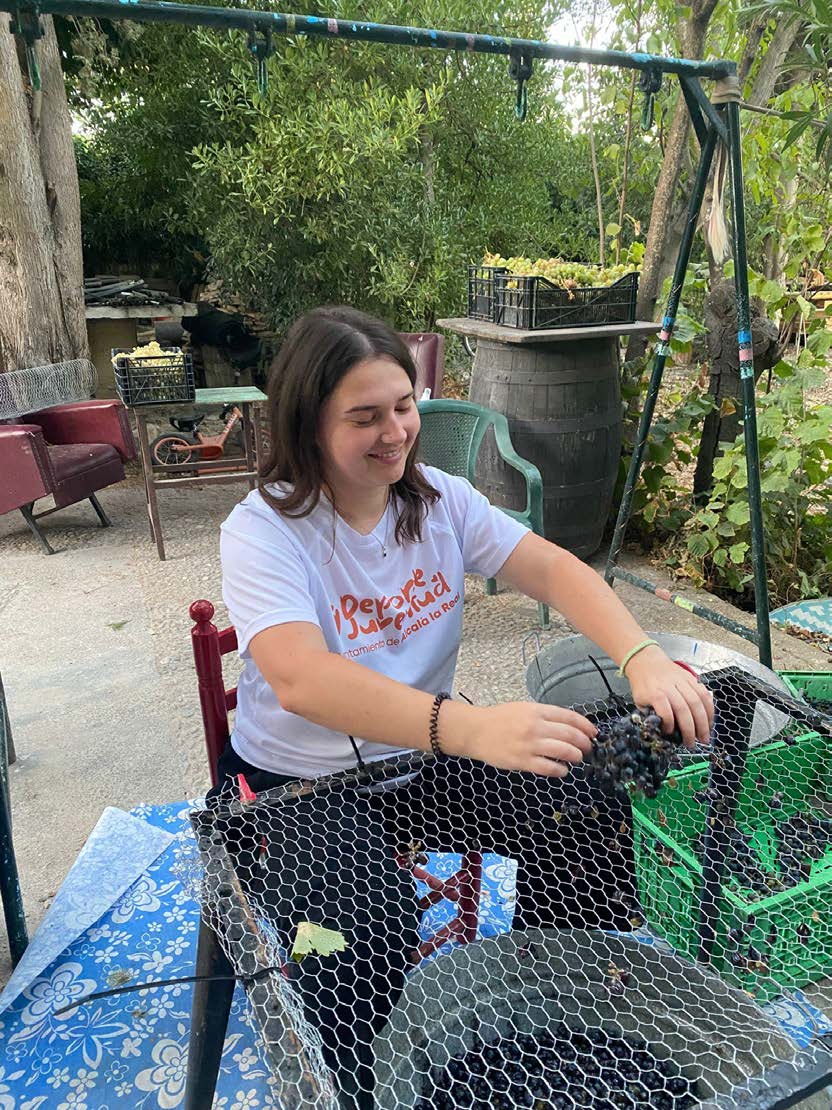
Our volunteering period lasted 45 days, and it was a busy time filled with many activities and learning experiences. Our team worked well together, and we enjoyed attending different events. One of the most memorable parts of the project was visiting Antonio’s garden several times. There, we learned about making wine and preparing olives. I had never experienced this before, and I was excited to take part in harvesting, cleaning the plants, and separating them.
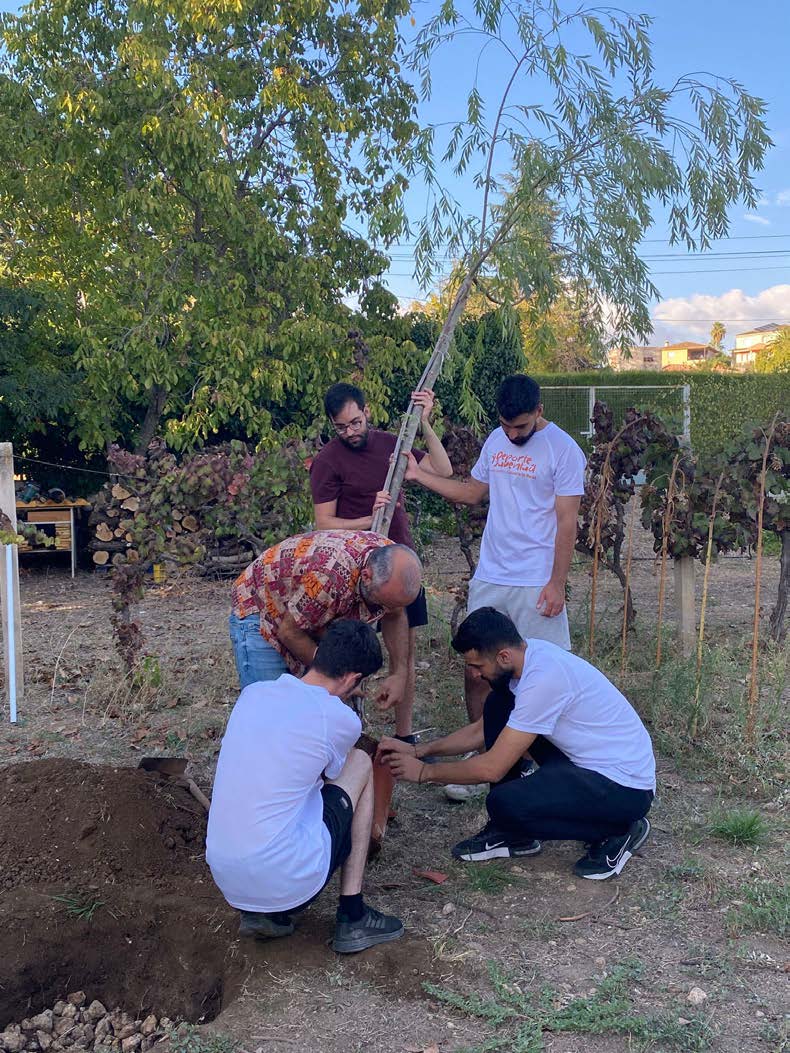
Antonio’s garden also gave us a practical example of a self-sufficient lifestyle. He grows different vegetables and fruits for his family’s consumption, and this helped me understand how rural traditions, care for the land, and family life can be connected. As one of our final activities, we planted a tree with the whole team. It was a symbolic way to remember our volunteering experience and to leave something positive behind.
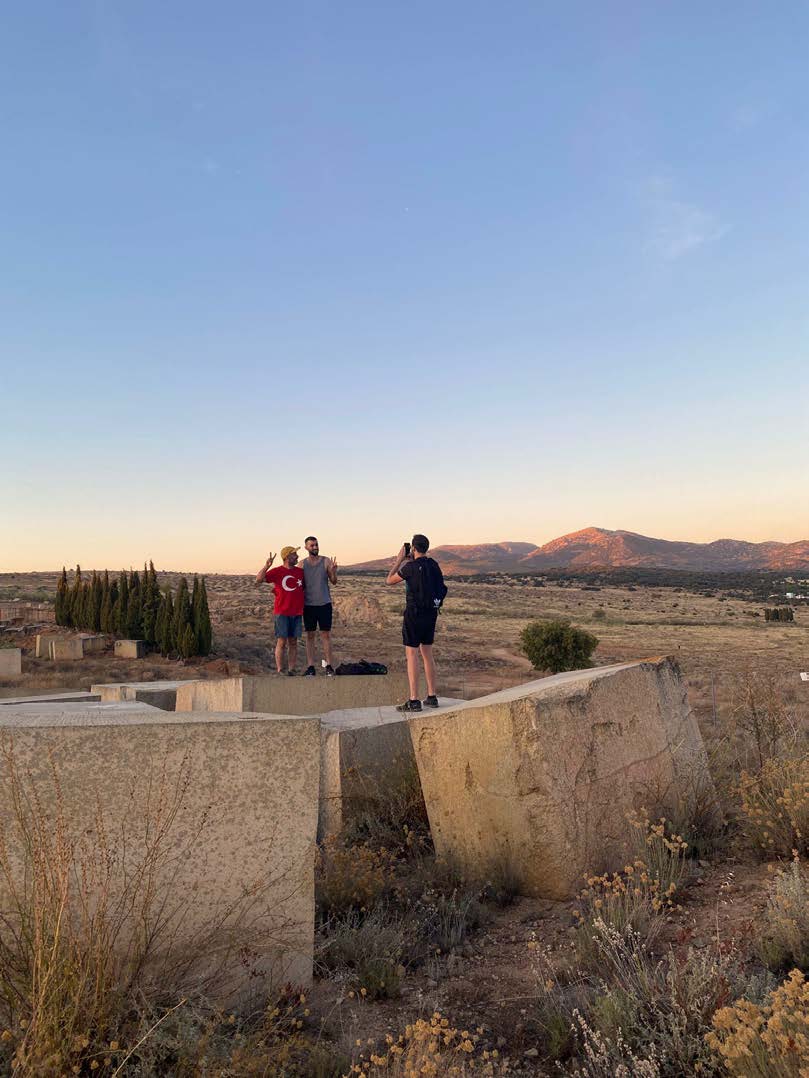
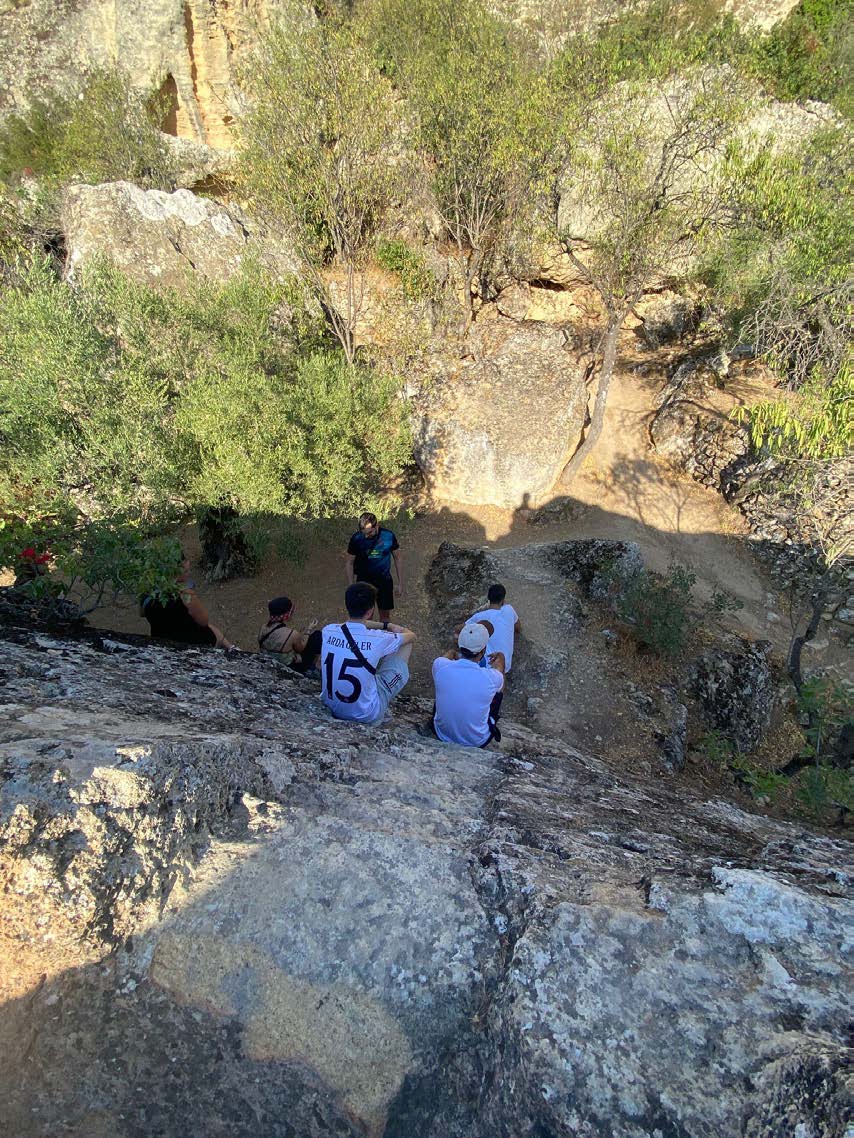
We also learned about the environment and the nature surrounding Alcalá through hiking activities. Antonio showed us how high temperatures affect olive trees and other plants. We also visited a canyon that had previously been used as a landfill and was later cleaned by local people to preserve a special natural place. During one of our hikes, we collected garbage and planted three citrus trees, which may grow and later replace older trees.
The landscape around Alcalá was very different from what I am used to in Hungary. I was amazed by the scenery of the mountains and the rural environment. These outdoor experiences helped me better understand the connection between environmental protection and community responsibility.
We also connected with the local community in different ways. One important activity was visiting a language school, where local Spanish people were learning English. We assisted the teacher during the lesson, and it was a very heartwarming experience. The learners were interested in our lives and welcomed us warmly into the class.
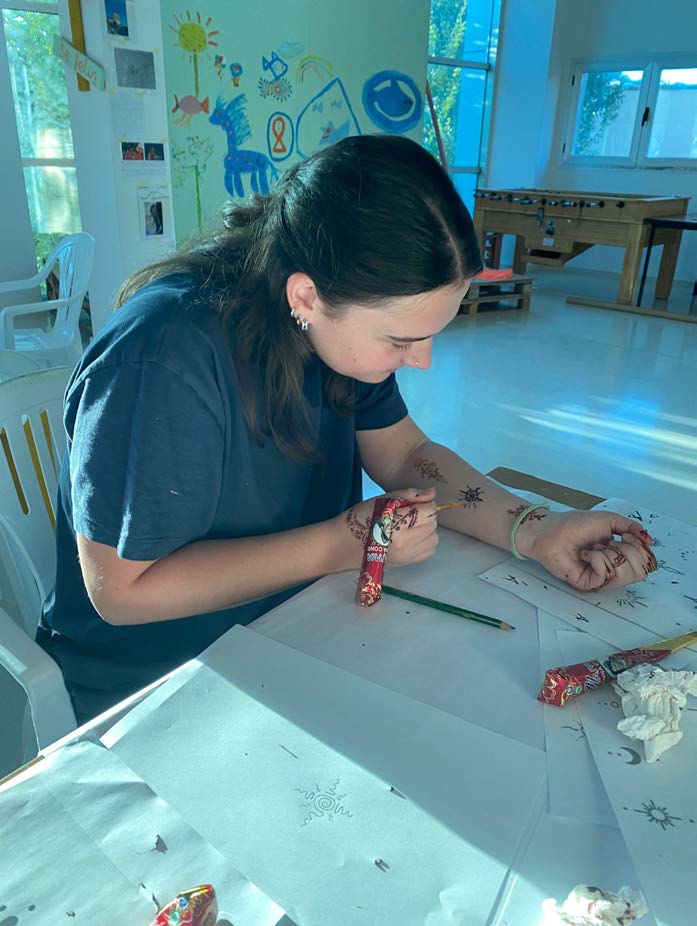
Another memorable activity was the workshop we organized for children, where we made henna drawings together. The girls were excited to talk with us in English and encouraged me to speak a little Spanish with them. The workshop lasted three hours, but it felt much shorter because we had such a positive time drawing, talking, and sharing the moment together.
Through this project, I gained many good memories and felt that I contributed to local community life in a meaningful way. I was glad to be in situations that I would not normally have the opportunity to experience. I learned about Spanish, Moroccan, and Turkish cultures, and I developed my intercultural communication skills.
Near the end of the volunteering period, I wished it could last longer so we could participate in more events and collaborate more with local people and with each other. LearnInRural gave me practical experience, new perspectives, and a stronger understanding of how rural communities work.